When Can You Give Baby Red Kidney Beans
Beginning the transition from breast milk or formula feeding to solid foods is an interesting and important time in a kid'due south development, one that may impact lifelong eating habits. Children gain many skills as they learn to eat solid foods, and parents sometimes struggle to know if and when their kid is ready to attempt new foods, and how best to practise so.
Establishing a positive experience with a diverseness of healthful foods is of import, and inquiry shows that creating an early on preference towards healthful foods may continue throughout childhood, adolescence, and even into machismo.
Beans: A Uniquely Nutritious Nutrient
Beans are a constitute-based food that provide primal nutrients for a growing child, including poly peptide, fiber, folate, magnesium, iron, and potassium. Because of their well-rounded combination of nutrients, beans were called out by the 2010 Dietary Guidelines for Americans as a "unique food," one that tin can be considered both a vegetable and a protein nutrient.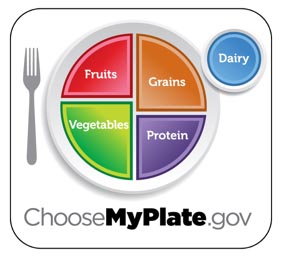
Is Your Child Prepare for Solid Foods?
It's important to remember that readiness for solid foods is less about historic period and more about a child'southward abilities. How will you know when to begin the transition to solid foods? As a general dominion of pollex, your babe is ready for solid foods when he or she displays the following behaviors. This typically happens around 6 months but may be earlier or afterward.
- Tin sit down up, alone or with support
- Lifts and supports head
- Mouths or chews on fingers and toys
- Opens rima oris when he or she sees something coming
- Turns head abroad if he or she doesn't want it
- Keeps tongue flat and depression to have a spoon
- Closes lips over the spoon and scrapes food from the spoon with lips
- Keeps the food in his or her mouth
Showtime Foods Schedule
When to introduce foods and the guild of introduction is a scientific discipline, and it's of import to innovate foods in the right order for developmental and diet reasons. Merely introduce one new, single ingredient food to your infant every five days. This allows you lot to see any negative reactions your child might have to a new food, such as an allergic rash.
First Food: Atomic number 26-fortified Baby Cereal
Cereal is an first-class first pick because it's easy to digest. The consistency can vary depending on the corporeality of liquid added. Mix the cereal with formula or breast milk. Start with thin cereal and as the infant becomes a better eater, thicken it up, somewhen to the point of having chunks to encourage rima oris development. Learning to swallow cereal and to principal a spoon can accept a month or more than!
Next Up:Mashed or Pureed Fruits & Vegetables
After a baby has enjoyed eating thick or fifty-fifty lumpy cereal, it is time to introduce fruits and vegetables. When introducing new foods, practice and so 1 at a time, allowing your baby an opportunity to experience and become familiar with the new taste and texture. Introduce 1 to 2 tablespoons of a new fruit or vegetable, along with the grain cereal, just not mixed. New fruits and vegetables should be well cooked, mashed, or pureed to a smooth consistency to starting time. You can transition to more texture as your child becomes a better eater.
When to Introduce Beans
Your child will be ready to try cooked, mashed beans when you see some of the post-obit signs, probable at seven to ten months of age.
- Sits alone
- Bites off nutrient
- Chews with rotary motion and moves food side-to-side in oral cavity
- Begins curving lip around loving cup
- Paw grasp changing from palmar to pincer grasp (pollex to alphabetize finger)
Should I requite my baby beans I've cooked from the dry form or canned beans?
Cooked dried beans are preferred, as they contain no sodium. If using canned beans, cull a low-sodium variety, and be sure to bleed and rinse the beans to remove backlog sodium. Rinsing tin remove about forty% of the added sodium. Two tablespoons of low-sodium, canned pinto beans, subsequently rinsing, contain about 20 milligrams of sodium.
How to Introduce Beans
- Beginning by introducing your child to ane to 2 tablespoons of cooked, mashed beans. Mash the beans to the consistency he or she tin can handle and enjoys. If your child likes more texture, simply utilise a fork or tater masher and leave the beans chunky. If your kid prefers smoother textures, a food processor volition work well.
- Introduce beans for the first fourth dimension when your babe isn't total but not starving. Provide a little chest milk or formula (about half of what he or she would ordinarily eat in a sitting), and and then introduce the beans. If your infant is too hungry, she may be frustrated she's not getting food fast plenty. If she's total, she may not be interested. This is a skilful dominion of thumb for introducing any new solid food.
- Don't introduce beans when your baby is tired, cranky, or sick. It's all-time to introduce a new food when a infant is well rested and happy!
- If at first you lot don't succeed, keep trying.Children eat what they like, and like what they know. You must requite a child fourth dimension and opportunities to learn if he or she likes or does non like a item food.
- If your baby refuses, don't force it. Pressuring a kid to eat when he doesn't want to may disrupt his internal hunger cues, and has been linked to overeating, and in some cases, a negative relationship with the forced food. Information technology'southward important to follow your babe'southward lead in feeding, letting him control the amount, tempo, and to end when he wants to terminate.
Is my child'due south "picky eating" something to be concerned about?
What we unremarkably refer to as "picky eating" is actually an innate condom mechanism for infants and toddlers as they transition from an exclusive milk/formula nutrition to solid foods. For much of human history, people did not know what was condom and unsafe to eat, and therefore, any new food is met with skepticism and caution until it is proven safe. Research suggests that information technology can betwixt 5 to 10—maybe upwards to 15!—exposures to a new food before it may be accustomed and preferred.
What About Portion Size? How Much Does My Child Need?
Portion sizes for young people are quite different than adult portions. Ellyn Satter, Registered Dietitian and international children's feeding skilful has provided this helpful chart to know what portion sizes children often eat. Keep in mind that these are general guidelines to help you lot understand how much a child might take or eat. Satter in no way intends the guidelines to be used for restricting a child's portion sizes or trying to get him or her to eat more he or she wants. Satter points out that children know how much they need to eat. To support them in eating as much or little as they need and growing in the manner that is right for them, follow Satter'south Division of Responsibility in Feeding: Parents are responsible for the what,when, and where of feeding and children are responsible for the how much and whether of eating. For more information, run into www.EllynSatterInstitute.org.
| Figure 8.two Portion Sizes For Children | ||||
|---|---|---|---|---|
| Food | Ages 1-3 years | Ages iii-5 years | Ages six-8 years | Ages 8+ years |
| Cooked or canned dry beans | 1-2 Tbsp | 3-5 Tbsp | five-viii Tbsp | ½ loving cup |
| Meat, poultry, fish | one-ii Tbsp | one oz | ane-ii oz | two oz |
| Eggs | ¼ | ½ | ¾ | 1 egg |
| Pasta, rice, potatoes | 1-2 Tbsp | 3-5 Tbsp | 5-8 Tbsp | ½ cup |
| Bread | ¼ slice | ½ slice | ane slice | 1 slice |
| Vegetables | i-2 Tbsp | 3-v Tbsp | five-eight Tbsp | ½ cup |
| Fruit | one-2 Tbsp or ¼ slice | 3-5 Tbsp or 1/3 slice | five-8 Tbsp or ½ piece | ½ cup or i piece |
| Milk | 1/4 – one/3 cup | one/iii – ½ cup | ½ to 2/3 cup | i cup |
| Fats & oils | To appetite | To appetite | To appetite | To ambition |
Satter, EM. 2000. Child of Mine. Feeding with Love and Skilful Sense, Page 339. Bedrock, CO. Balderdash Publishing Company. Used with permission from the author.
Making Family Meal a Time Where Healthful Eating is Practiced and Enjoyed by All Family Members
Family meals are a bully place to encourage everyone in the family unit to eat a healthful diet. The Dietary Guidelines for Americans recommends all people ages 2 and older consume between 1 to iii cups of beans per week. Serving beans at near meals and having young children eat forth with the family is a swell manner to encourage healthful eating for your child, besides every bit the entire family.
Research has constitute many benefits to regular family meals including the evolution of healthful eating patterns, increased nutrient intake, and decreased likelihood of existence overweight. Modeling skillful eating behaviors, communicating positively about food, and creating a positive context for healthful foods will be beneficial for your baby and the entire family.
References
Birch LL, McPhee Fifty, Shoba BC, Pirok E, Steinberg L. 1987. What kind of exposure reduces children's nutrient neophobia? Appetite 9:171–78
Birch, 50.L, Fisher, J.O., and Davison, M.Yard. (2003). Learning to overeat: Maternal use of restrictive feeding practices promotes girls' eating in the absenteeism of hunger. American Journal of Clinical Diet. 28: 215-220.
McCray, Five., Harris, V.W., and Gillen, 1000. (2013). Benefits of Family Meals. Retrieved from http://edis.ifas.ufl.edu/fy1362 Jan 29, 2015.
Nicklaus, S., Boggio, 5., Chabanet, C., and Issanchlou, South. (2004). A prospective report of food preferences in babyhood. Food Quality and Preference. 15: 805-818.
Nu, T., MacLeod, J., and Barthelemy, J. (1996). Effects of age and gender on adolescents' food habits and preferences. Nutrient Quality and Preference. seven: 251-262.
Satter, EM. 2000. (p.g. 250-251). Child of Mine. Feeding with Love and Skilful Sense. Boulder, CO. Balderdash Publishing Company.
Satter, EM. 2000. (p.one thousand. 256-257) Child of Mine. Feeding with Love and Skillful Sense. Boulder, CO. Bull Publishing Visitor.
Satter, EM. 2000. (p.g. 339) Child of Mine. Feeding with Love and Skilful Sense. Boulder, CO. Bull Publishing Company.
Skinner, J.D., Carrut, B.R., Wendy, B., and Ziegler, P.J. (2002). Children's food preferences: a longitudinal analysis. Journal of the American Dietetic Association. 102: 1638-1647.
U.s. Section of Agronomics. Dietary Guidelines for Americans, 2010. Washington, DC: U.Due south. Department of Health and Man Services; 2010.
United states Department of Agronomics. Feeding Your Baby in the Get-go Year. Retrieved from http://wicworks.nal.usda.gov/wicworks/Topics/infantfeedingtipsheet.pdf on Feb 24, 2015.
Source: https://beaninstitute.com/beans-for-babies/
0 Response to "When Can You Give Baby Red Kidney Beans"
Post a Comment